
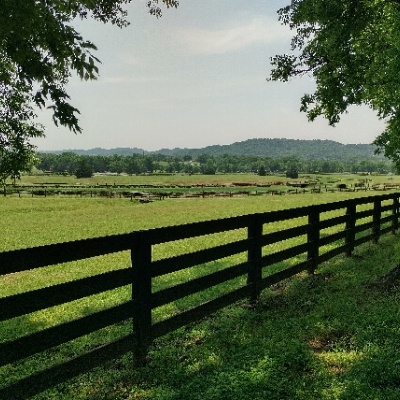
Long ago and far away. And unforgettable. July 2005
Long ago and far away. And unforgettable. July 2005
I just listened to Avery Trufelman’s podcast Lace and Labor. What a banger. An absolutely thrilling episode for all sorts of reasons.
For a start, I loved the idea that just as the machines came for hand knitting, they have come for podcasting. So Avery Trufelman got two smooth-talking faux-hosts to talk about the history of knitting. No idea what kind of prompts she used, but the results were both fun and indicative of the vast distance between Trufelman’s own art and a stochastic parrot’s version; close, but not nearly close enough.
I was reminded of my own attempt, long ago (1995) and far away, to do something similar. Richard Sanders and I made a programme for Farming Today on BBC Radio Four about the modern peasant and various practitioners who were not ashamed to call themselves peasants. I came up with the cracking wheeze of getting my swanky Apple computer to speak out loud the email replies I got from one of them, which Richard would otherwise probably have voiced. It worked (although alas, no trace of the show remains today).
Anyway, Avery Trufelman’s episode also pointed out that as the knitting machines improved, knitters applied human ingenuity to come up with patterns and colours, like Fair Isle, that the machines couldn’t do. At least, not for a while. Eventually, of course, human ingenuity and machines proved more than a match for human ingenuity and hands, except in one respect.
Crochet!
I’d never really thought about it, but because it uses a single needle, there is no way a machine can copy the moves fingers and yarn make around the hook. They can knit something that looks a lot like crochet, but unlike actual crochet, fake crochet looks different on its two sides. Only one of them resembles crochet.
Another aspect of the story that I had been completely unaware of is the role of crochet in the Irish Potato Famine. Women and girls saved many destitute families by making Irish crochet lace, They were paid a pittance, their produce brought high prices from the English elite, and middlemen raked in the profit. Their skills went with them as they emigrated, often providing the income to get started on a new life wherever they landed.
There was so much more of interest in the episode, most notably the different status of knitting and crochet at different times and among different social strata. A perfect example of grabbing something seemingly everyday and letting it take you where it will. A pleasure in every way.
Meta-conclusions too forced themselves on me as I listened. The vast bulk of current podcasts is like Fair Isle, human ingenuity outrunning the machines, for now. And the day has already dawned in which you can create a million knitting machine knock-offs paying only a pittance to the people who manage the machines. But my own podcast and many others, like Avery Trufelman’s Articles of Interest, are pieces of crochet, a permanent revolution against the machine.

Webmentions allow conversations across the web. If you have linked to this post, put your post’s URL below.








Add a comment